A proposal to the National Union of Architects of Ukraine
A Ground Zero
Neighbourhood Heart
One damaged neighbourhood, rebuilt as a whole: a community centre with a shelter people can live in beneath it, a Soviet-era block renewed beside it, new homes from a kit of parts, a landscape made from the rubble, its own energy, and its history kept. Small enough to start now, complete enough to show the whole idea, and designed to be repeated across Ukraine.
Andrew Cowan Architects had an office in Warsaw from 1990 to 2005, through Poland’s transition. Genesis →
November 2026: following meetings with the Union’s leadership in Kyiv in 2023 and October 2026, the next step is to choose a first hromada together.
Short on time? Flip through the 5-page Pitch →
“A shelter, a school, a home and a garden — built from what the war left behind.”
The next step
What we propose to the Union
- Choose a hromada together, where damage is heavy and restoration has not yet begun.
- Run the first Neighbourhood Heart design competition or workshop with the Union.
- Build a first prototype of the kit.
- Prepare a joint funding bid for a pilot of about £20 million with the municipality.
The full proposal behind these steps follows below ↓
Why a neighbourhood
Not one building, but a place to return to
Towns such as Borodyanka are being repaired building by building, so that families can come home quickly. That work is vital, but it rebuilds the old Soviet town: the same basements, the same dependence on a fragile grid, the same lack of public life. More than 60% of Ukraine’s homes were built before 1970.
A Ground Zero project shows what reconstruction adds when it is planned as a place — read from the history, culture and landscape of the town, and built with the people who live there.


The proposal
Six parts of one place
A community centre with a shelter you can live in
School, clinic, culture and the hromada office above; below, a protected core with daylight, air and room to live for weeks, not hours. It answers the war without being defined by it.


A Soviet-era block renewed, not demolished
A new skin, a new protected core and lift, and light timber storeys on top — while residents stay. Where the structure is sound, renewing the 1950s–70s blocks is faster and kinder than replacing them.


New homes from a kit of parts
Factory-made parts that families can assemble and extend themselves, growing outwards from one protected core. Prototypes first with a Swedish design partner, then made in Ukraine.


A landscape made from the rubble
Crushed war debris becomes earth berms, planted roofs and a new public square around a restored memorial. As in the Olympic Centre on the Vistula, the buildings rise out of the landscape, which keeps them warm in winter and cool in summer.


Its own energy
Heat pumps, solar panels and batteries keep the centre and the block running when the grid is hit. Energy resilience is a form of protection.


Passive design: before any panel or heat pump, the buildings do the work themselves. Orientation, shading, cross-ventilation and planting cut the energy every home needs. This series shows how, using our riverside work on the Thames in London.
Its history kept
The memorial, the surviving buildings and the town’s own stories are restored and woven into the new square, so the neighbourhood is read from its past as well as rebuilt for its future. In Borodyanka, the statue of Taras Shevchenko — shot through in 2022 — would stand at the heart of the new public space.


The master plan
One unit, repeated across Ukraine
The Neighbourhood Heart is the building block of a national plan — the first one is the prototype, the training ground for local firms and the proof for funders.
Zero corruption in practice
Built to earn trust
Rebuild Humanely
The kit of parts in detail
The system behind the six parts: the six principles, the five families of parts, one section from shelter to rooftop, protection in tiers, the village community centres near Lviv, how the rubble of war becomes building material, how production starts abroad and moves to Ukraine, the partners, and how the system is licensed.
Project images · click an image to enlarge


The next step
What we propose to the Union
- Choose a hromada together, where damage is heavy and restoration has not yet begun.
- Run the first Neighbourhood Heart design competition or workshop with the Union.
- Build a first prototype of the kit.
- Prepare a joint funding bid for a pilot of about £20 million with the municipality.
Let us rebuild homes people are glad to return to.
Andrew Cowan RIBA · aca@andrewcowanarchitects.com
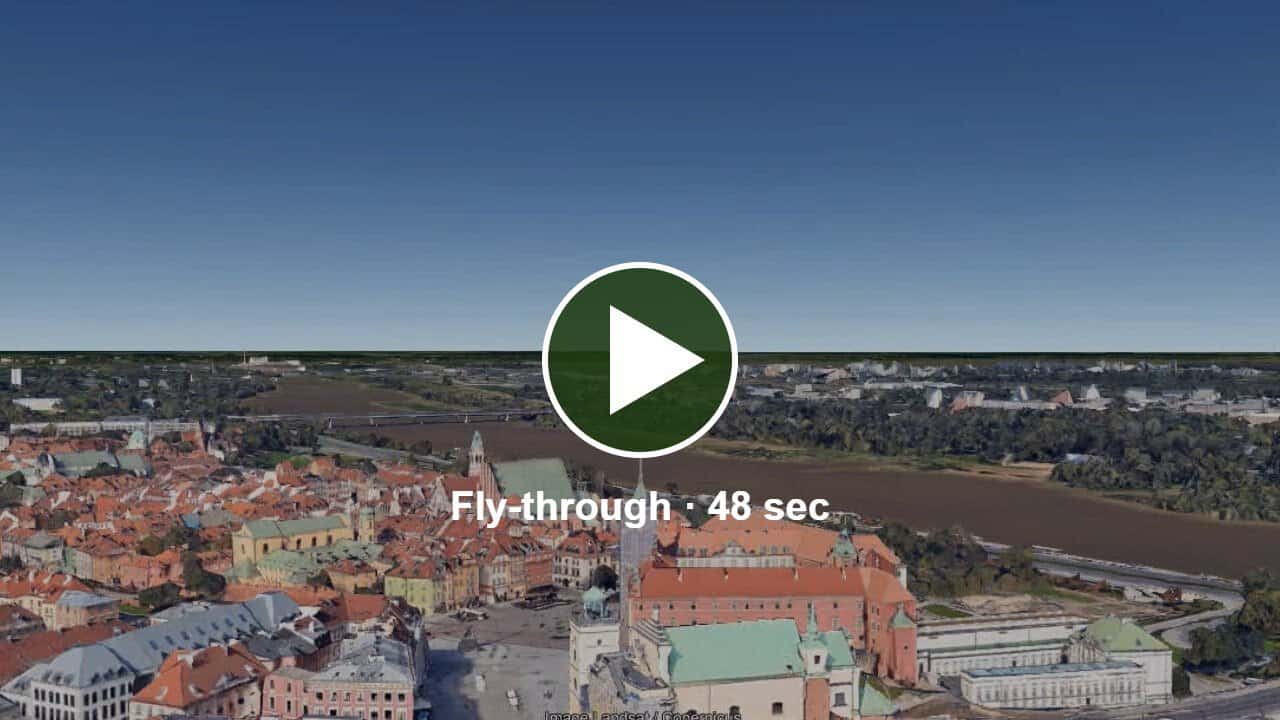
Proven over thirty years
From Warsaw’s transition to Ukraine’s
During those years the practice developed a scheme for the Polish Olympic Committee on the Vistula. It already brought together mixed uses, an undulating planted landscape and passive design — the same ideas, now shaped for Ukraine.
Let us rebuild homes people are glad to return to.
Andrew Cowan RIBA · aca@andrewcowanarchitects.com